Solar PumpingJodhpur district, Rajasthan120 systems · 3 to 7.5 HPSample
Rajasthan Solar Water Pumping Programme
Distributed solar pumping systems replacing diesel pumps across smallholder farms in an arid district with deep borewells.
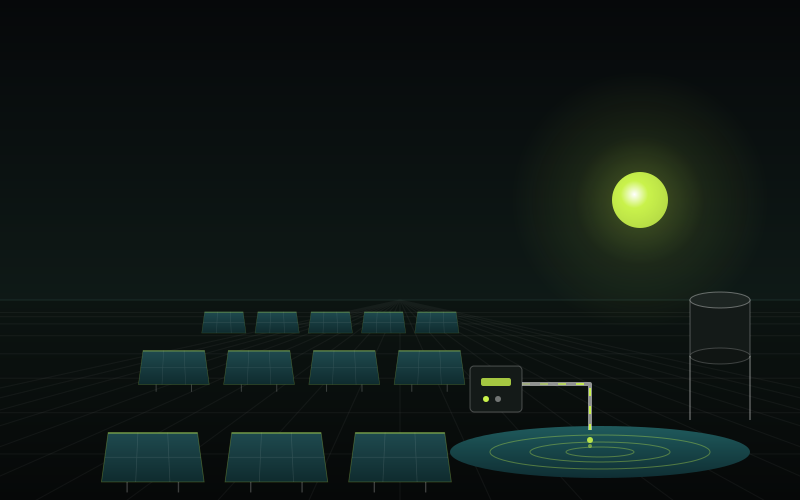
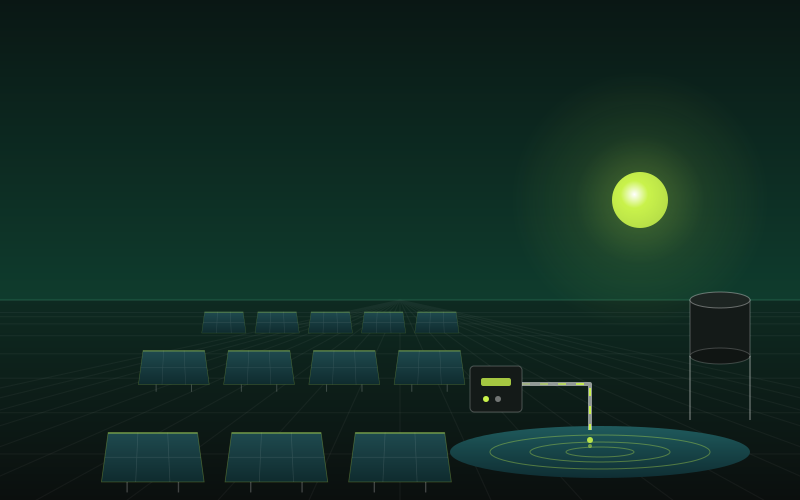
A solar water pumping system converts sunlight directly into the energy needed to lift and move water. A photovoltaic array feeds a controller that drives a submersible or surface pump, so water is delivered whenever the sun is shining, with no fuel, no grid connection and very little maintenance.
ARK designs each system around the site: the water source, the total dynamic head, the daily water requirement and the local solar resource. The result is a correctly sized array, controller and pump that deliver the required flow through the year rather than a one-size-fits-all kit.
Systems are built with MPPT controllers that extract maximum power in low light, brushless motors for long service life, and protections against dry-run, overload and reverse polarity. Optional remote monitoring reports flow and system health to a phone or dashboard.
At a glance
Values marked “Sample” are typical ranges to be confirmed against the actual product range.
Replace diesel pumps and eliminate recurring fuel and transport expenses.
Water availability follows the sun, matching crop irrigation windows.
Brushless DC motors and solid-state controllers with no daily servicing.
Works on remote farms and villages with no grid or unreliable supply.
Panels typically carry 25-year performance warranties from manufacturers.
Optional IoT reporting of flow, power and faults from any location.
Flood, sprinkler and drip irrigation for smallholder and commercial farms.
Community and institutional water schemes with overhead storage.
Reliable troughs and washing water for cattle sheds and dairies.
Orchards, nurseries and polyhouses needing precise, scheduled watering.
Water exchange and aeration support for fish and shrimp ponds.
Schools, hostels and health centres in off-grid locations.
The PV array converts sunlight into DC electricity throughout the day.
An MPPT controller or VFD tracks maximum power and protects the motor.
A submersible or surface pump draws water from a borewell, well or canal.
Water flows to a tank, canal or drip network sized for the daily requirement.
Typical ranges are listed below. Every proposal states exact ratings, warranties and compliance for the equipment supplied.
Values marked “Sample” are typical ranges to be confirmed against the actual product range.
Mono-PERC or TOPCon modules sized to the pump and head.
Hot-dip galvanised structure with manual seasonal tilt option.
MPPT controller or VFD with digital display and protections.
Stainless-steel submersible or surface pump with matched motor.
UV-resistant DC cables, lightning arrestor and earthing kit.
GSM/IoT unit reporting flow, energy and faults.
Borewell yield, head, daily requirement and shading assessment.
Array, controller and pump selection using local solar data.
Delivery, structure erection, pump lowering and wiring.
Flow verification, handover and operator training.
Preventive checks, spares and remote fault support.
A 3 HP submersible system replacing a diesel pump on a 2-hectare farm with drip irrigation.
Outcome: Fuel-free daytime irrigation and predictable operating cost.
A 5 HP system filling an overhead tank that gravity-feeds household taps.
Outcome: Reliable daily supply without dependence on grid timing.
A surface pump feeding troughs and shed washing lines from an open well.
Outcome: Reduced labour and consistent hygiene water supply.
Distributed solar pumping systems replacing diesel pumps across smallholder farms in an arid district with deep borewells.
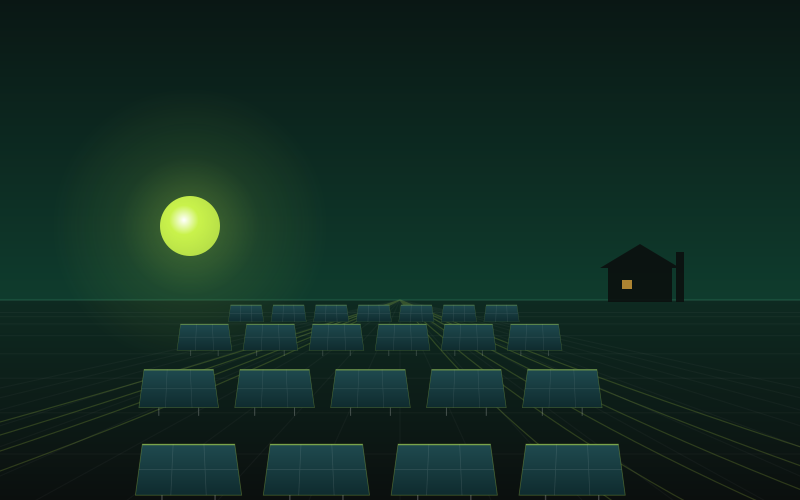
High-capacity solar pumping paired with drip irrigation for water-intensive crops across a cluster of farms.
Not answered here? Ask our engineers.
Yes, at reduced flow. MPPT controllers extract usable power in diffuse light, and systems are sized on annual solar data so seasonal variation is accounted for. Storage tanks bridge low-light periods.
Usually not. Storing water in a tank is far cheaper than storing electricity in batteries. Batteries are only recommended where night-time pumping is essential.
Periodic panel cleaning and an annual inspection of cables, structure and controller. Brushless motors have no brushes or carbon to replace.
In many cases, yes. AC pumps can be driven by a solar VFD. We assess the motor rating, head and daily requirement before recommending conversion or replacement.
Subsidy schemes for solar pumps vary by state and change over time. Our team can advise on the schemes applicable at your location at the time of enquiry.
Pump ranges, controller specifications, sizing tables and structure options.
Step-by-step installation, wiring, commissioning and troubleshooting.
How head, flow and solar resource determine array and pump selection.
Other solutions
Start a conversation
Share your site details and requirement. Our engineers will size the system and send an itemised proposal.